Collector guide
TCG Value Checker
A useful TCG value checker narrows the card to its exact version before comparing price ranges. This protects you from overvaluing common prints or undervaluing rare variants.
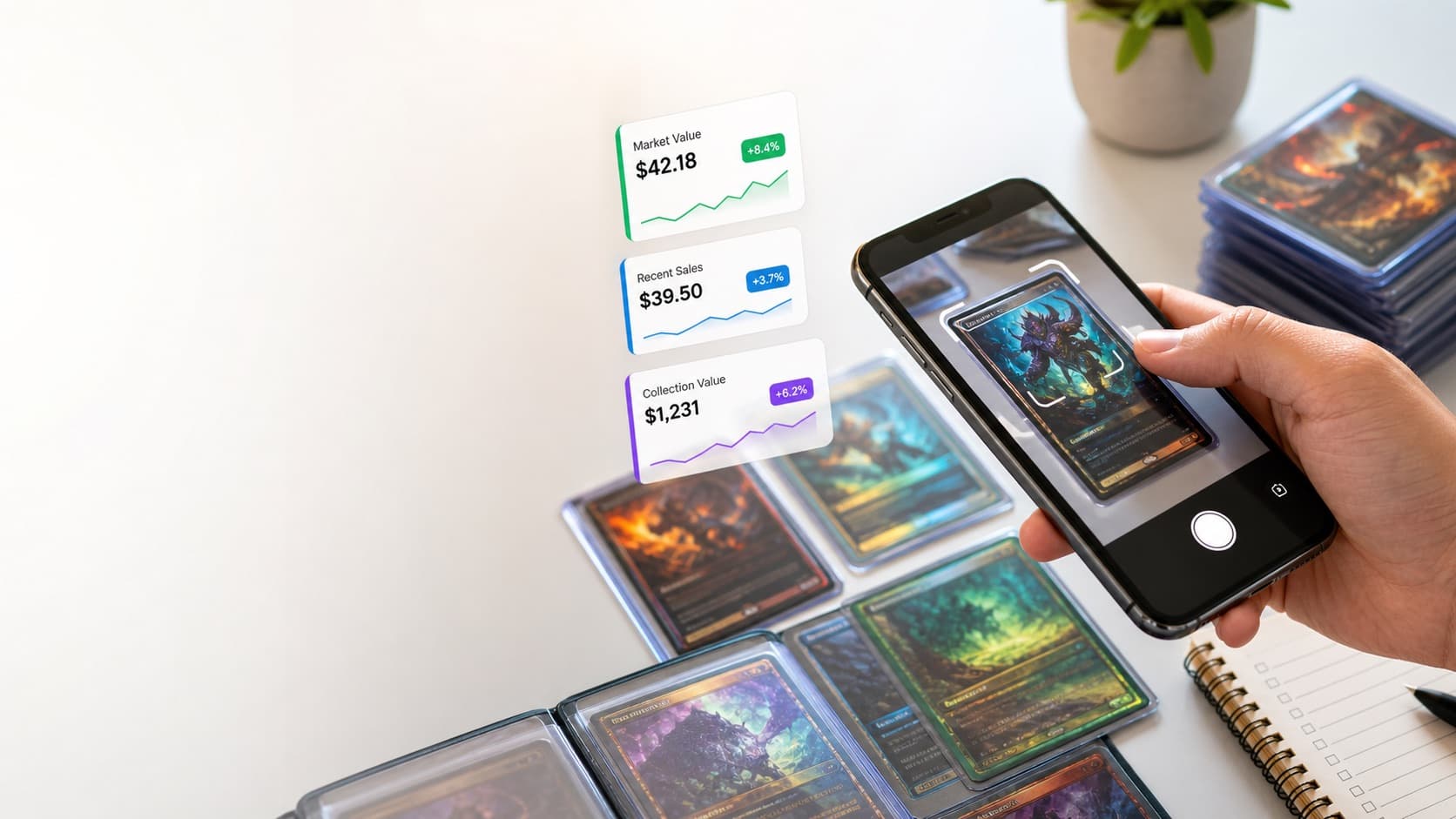
Card value scanner
Upload a card photo for a value preview
Use the homepage scanner flow to upload a clear Pokemon card image and review the card value workflow.
Best For
Collectors and sellers checking prices across multiple trading card games.
When To Use It
Use it when you need a careful card value process before selling, buying, or trading.
Workflow
tcg value checker checklist
- Identify the exact card, set, number, rarity, and language.
- Grade condition honestly: surface, corners, edges, centering, and any dents matter.
- Compare sold prices or trusted market ranges, not only active listings.
- Separate raw card value from graded-card value because the markets can be very different.
What This Covers
Collector-friendly details
Multi-game value workflow
Variant checks
Condition notes
Market review prompts
Questions
Quick answers
What is the first step in checking TCG value?
Identify the exact card version before comparing prices.
Why are sold listings useful?
Sold listings show what buyers actually paid, while active listings only show seller expectations.
Do playable cards always stay valuable?
No. Competitive demand can shift when formats, rules, or metagames change.
How do I check trading card value accurately?
Start by confirming the exact card, set, number, rarity, language, and condition. Then compare recent market ranges for that exact version instead of using one random listing.
Why does card condition matter so much?
Condition affects buyer confidence. Scratches, dents, edge whitening, corner wear, surface marks, and centering can all move a card into a different value range.
Should I use sold prices or listed prices?
Sold prices are usually more useful because they show what buyers actually paid. Listed prices can be aspirational and may sit unsold for a long time.
Can a raw card and graded card have different values?
Yes. Graded cards are valued differently because the grade, grading company, population, and buyer demand all affect the final market range.
What details should I save for each card?
Save the card name, set, collector number, rarity, language, finish, quantity, condition notes, and the date you checked the value.
Why do similar-looking cards have different prices?
They may be different prints, rarities, promos, foils, alternate arts, languages, or conditions. Small version differences can create large price differences.
How often should I recheck card value?
Recheck before buying, selling, trading, or insuring a collection. Prices can move after set releases, competitive changes, social trends, or renewed collector demand.
Related Pages